My Hospital Town Doctor Games
- 3.5
- Rating
- 10.00M
- Installs
- Free
- Price

 Analysis by App-foxy
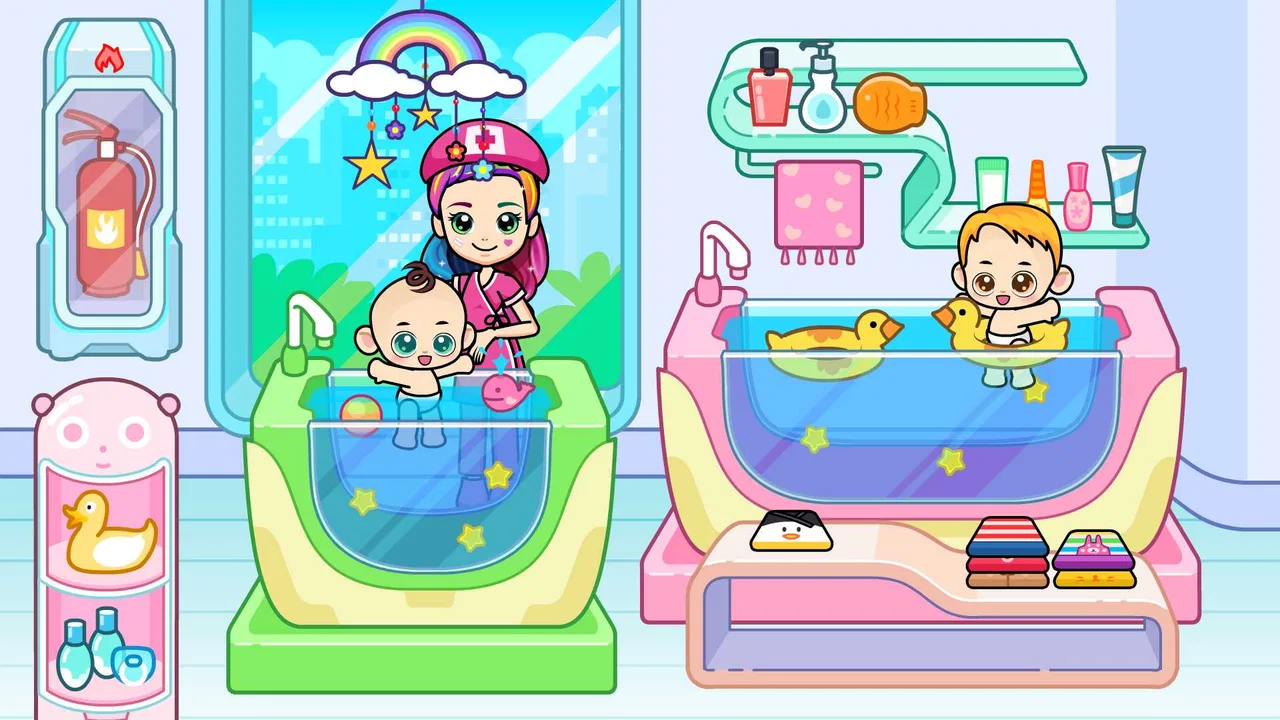
My first impression of My Hospital Town Doctor Games was that it is less about learning medical facts and more about making a child feel comfortable inside a pretend hospital. It is a free educational game from Tizi Town Games, aimed at Everyone, where the appeal comes from choosing what to do next rather than following a demanding challenge. I found it easiest to understand when I treated each visit as a small story: enter a hospital setting, notice a patient or object, try an action, watch the scene respond, and then decide whether to continue or start a fresh little scenario.
That distinction matters. A child expecting a serious medical simulator will find a very gentle experience, while a younger player who enjoys role-play can quickly understand the purpose. The store summary presents it as a baby hospital game for children, and that description is fair, but the real attraction is the combination of familiar doctor-play and open-ended touching. It feels closer to a digital toy box than to a lesson with correct and incorrect answers.
How the hospital play loop works
I found the hospital play loop easiest to enjoy when I treated each tap as part of a story rather than a task to finish. The child can try an action, notice the response, and decide what their pretend visit needs next; an adult can make that choice more thoughtful by asking the child to explain it. That simple rhythm also makes it easier to spot when the interaction is no longer holding their attention.
You May Also Like

 Blood Strike: 2.5 Anniversary
Blood Strike’s Loadouts Turn Every Drop Into a Tactical Gamble
A close look at Blood Strike’s custom loadouts: how fast access to signature weapons reshapes its battle royale rhythm, rewards preparation, and narrows the gap between fights.

 Pandora - Music & Podcasts
Pandora’s Music Is Easy to Start, but Harder to Recover
Pandora’s strength is its low-effort path from a seed to a station. Its weak spot is how much confidence it asks you to place in connection, setup, and quiet recovery.

 8 Ball Pool
 Is Built on Rivalries, Rematches, and Routine
A close look at the rivalries, rematches, shared routines, and unanswered safety questions that turn a quick pool match into a persistent mobile community.

 Samsung Music
’s Quiet Strength Is Playing What You Already Own
Its reach comes less from spectacle than from dependable access to a personal library. That simplicity is both the app’s strongest retention engine and its ceiling.

 AccuWeather: Weather Radar
AccuWeather Review: A Quick, Clear Forecast for Everyday Decisions
For everyday plans, the best forecast is the one you can understand quickly. AccuWeather makes rain timing, radar, and local conditions easy to act on, with a few trade-offs.

 Hill Climb Racing
Why Hill Climb Racing Still Turns Crashes Into One More Run
A tiny car, a bumpy hill and one more upgrade: Hill Climb Racing keeps resurfacing because its simple chaos makes every near-miss feel personal.
More From Our News Desk



The first action is simple enough for a young player
The strongest part of the opening is that the child can begin by exploring instead of studying instructions. In my experience, that lowers the barrier immediately. A player can tap around the hospital environment, select an item, or interact with a character and learn from the response. The game does not need a long explanation before the first meaningful moment, which is important when the intended player may still be developing reading confidence.
This is also where the game’s educational category needs to be understood correctly. It supports recognition, sequencing, pretend-care routines, and basic cause-and-effect thinking, but it is not a substitute for a science lesson. The learning comes from acting out a situation and noticing what follows. For a child who likes dolls, toy clinics, or imaginative family games, that practical style can be more inviting than memorizing labels.
I would introduce it on a tablet or phone while sitting nearby for the first session. Not because the controls are especially difficult, but because a child may ask what an object represents or invent a completely different story from the one I expected. That freedom is part of the charm. An adult can turn the interaction into conversation without taking control away from the child.
A useful approach is to ask the player to describe the patient’s problem before tapping everything on screen. Afterward, ask what changed and what they would do next. This turns a short touch sequence into a small exercise in observation and communication. It also prevents the game from becoming nothing more than rapid tapping.
Feedback keeps the next tap inviting
The central rhythm is action, response, and another choice. A child touches something, sees the scene react, and receives enough encouragement to keep exploring. That feedback is more important here than difficulty. There is no need for a young player to worry about failing a diagnosis or losing a turn, so the experience remains approachable even when the child is experimenting randomly.
I noticed that this rhythm works best in short bursts. At the beginning, each interaction feels like a discovery. After several similar taps, the novelty can soften, especially for children who prefer clear goals and visible progress. The game is therefore strongest when the player supplies the story: perhaps they are preparing a patient, helping a doctor, or simply arranging a sequence of hospital actions.
The lack of pressure is a genuine advantage for preschool-style play, but it is also a limitation for older children. If your child wants puzzles with increasingly difficult answers, timed tasks, or a structured curriculum, this will probably feel too loose. The feedback says, in effect, “keep exploring,” rather than “master this skill before moving on.” That is a deliberate trade-off, not a flaw in the controls.
For parents, the most useful habit is to slow down the interaction. Instead of allowing a child to sweep across every object, suggest one action at a time: choose an item, explain its purpose, then predict what might happen. This creates a repeatable routine and helps the educational value come from thinking rather than from the animation alone.
What counts as a reward here
The reward is mainly immediate satisfaction. A character reacts, a scene changes, or a new piece of pretend-care becomes possible. I would not install this expecting a deep achievement system or a long-term collection to manage. Its reward is the small emotional payoff of helping, discovering, and making the hospital world respond to the player.
That kind of reward suits children who enjoy imaginative repetition. They may return to the same setting because they want to replay a familiar role with a different story. One session might be calm and careful; another might be silly and exploratory. The game gives room for both without requiring the child to perform perfectly.
There is also a social reward when an adult joins in. A parent can take the role of a worried family member, while the child acts as the doctor. A sibling can invent a patient story and let the player decide what happens next. These interactions are more valuable than simply watching the screen, because they connect the digital activity with language, empathy, and turn-taking.
I would be careful, however, about describing the reward as medical knowledge. The game can encourage interest in a hospital setting and help a child rehearse caring behavior, but pretend treatment should not be confused with real health guidance. If a child asks whether something in the game is what a real doctor always does, that is a good moment to explain that the game is make-believe.
Why another session begins
The reset is natural because the play does not depend on preserving a complicated state. Once a child has finished one imagined visit, there is an easy reason to begin again: create another patient story, try a different order of actions, or hand the device to someone else. That makes the game suitable for waiting rooms, quiet time, or a short wind-down period, provided the child is comfortable with touch controls.
This reset also reveals the game’s main design identity. It is built around repeatable scenes rather than a campaign that must be completed from beginning to end. I appreciate that for younger users because they can stop without feeling they have abandoned an important mission. The downside is that children who need a strong sense of advancement may ask, “What do I unlock next?” and find the answer less satisfying than in a conventional level-based game.
A realistic everyday use case would be a child who has recently visited a clinic and wants to replay the experience in a less intimidating way. An adult could let the child explore the hospital theme, then talk about which parts felt familiar and which parts were only pretend. Another good moment is a rainy afternoon when a child wants role-play but the family wants something quieter than a physical doctor kit.
I would avoid using it as a distraction during a real medical appointment if the child needs to listen to staff or remain aware of what is happening. The game can be comforting in the right setting, but any screen can pull attention away from important instructions. Used at home, it works better as a conversation starter than as a replacement for reassurance from a parent or professional.
Where it fits among children’s alternatives
Compared with a coloring app, this game offers more pretend sequence and character interaction. Compared with a puzzle game, it is gentler and less focused on correctness. Compared with a physical doctor set, it is easier to reset and does not require space for toy instruments, but it loses the tactile variety of handling real objects. I see it as a digital companion to imaginative play, not a complete replacement for it.
Its hospital theme gives it a clearer identity than a general dress-up game, yet the open-ended style means it may not satisfy a child looking for explicit explanations of anatomy or first-aid steps. For that purpose, a carefully designed science or health-learning app would be a better choice. For a child who wants to play doctor without being tested, this is the more comfortable option.
The developer, Tizi Town Games, has positioned the experience for a broad family audience rather than a narrow specialist group. It is free to start, with in-app purchases ranging from $1.99 to $9.99 per item. I would check the purchase settings before handing over the device, especially if the child plays independently. The free entry makes it easy to test the style, while the optional spending means families should decide in advance what access is appropriate.
Practical details before installing
The game has reached over 10 million installs, carries an average rating of 3.5 from around 22 thousand ratings, and has 292 reviews listed. Those figures suggest that it has found a substantial audience, but they also tell me not to treat popularity as proof that every child will enjoy it. The rating is middling rather than exceptional, which fits my view: the concept is accessible, but its relaxed repetition will not match every player.
It was released on November 27, 2020, and the current version is 3.1.9. It requires Android 7.0 or later. Families using an older device should check compatibility before planning around it, while users on a supported Android version can reasonably try the free starting experience and judge the interaction for themselves.
The Everyone age rating makes the game suitable for a wide family audience, but age suitability is not the same as developmental fit. A very young child may still need help interpreting the screen, while an older child may find the lack of challenge limiting. I would recommend it most confidently for children who already enjoy pretend-care play and who are happy to create their own stories.
One small but important tip is to treat the first play as a test of attention span rather than a commitment. Watch whether the child explores thoughtfully, invents dialogue, and returns to actions with a purpose. If the child only taps quickly and asks for a more difficult game, the hospital theme may be attractive while the actual loop is not a good match.
My verdict on the complete loop
My Hospital Town Doctor Games succeeds when its loop stays tangible: a child performs an action, receives a friendly response, enjoys the small reward, resets the scene, and begins another story because the next possibility is self-created. That is a modest structure, but it is well suited to relaxed educational play. The game does not need to overwhelm a young player with rules to make a hospital setting feel interesting.
I recommend it to families looking for a free, gentle role-play game that can support conversation about caring, routines, and feelings around doctors. I would skip it if the goal is formal medical education, challenging puzzles, detailed progress tracking, or a game that steadily raises its difficulty. I would also set clear boundaries around the in-app purchases before a child plays alone.
In the end, I see this as a digital pretend-play space with an educational flavor, not a serious training tool. Its best sessions are short, imaginative, and shared with an adult or sibling. When approached on those terms, the hospital setting gives children a friendly place to experiment, repeat familiar actions, and start another story whenever they are ready.
FAQs for My Hospital Town Doctor Games
01What is the main objective of My Hospital Town Doctor Games?
My Hospital Town Doctor Games is a simulation game where players manage a hospital, diagnose patients, and perform surgeries. The main objective is to build and expand your hospital, ensuring patients receive the best care. It combines elements of strategy and creativity, allowing players to customize their hospital environment.
02Is My Hospital Town Doctor Games free to play?
Yes, My Hospital Town Doctor Games is free to download and play on both Android and iOS platforms. However, the game includes in-app purchases for certain items and features. These purchases can enhance gameplay but are not necessary to enjoy the full experience of the game.
03What age group is My Hospital Town Doctor Games suitable for?
My Hospital Town Doctor Games is designed for players of all ages, with simple controls and engaging content that appeals to both kids and adults. The game's educational aspect makes it particularly suitable for children interested in medicine and healthcare, though parental guidance is recommended for in-app purchases.
04Does My Hospital Town Doctor Games require an internet connection?
While My Hospital Town Doctor Games can be played offline, certain features, such as updates and in-game purchases, require an internet connection. Playing online may also offer additional benefits, such as new content and events, enhancing the overall gaming experience.
05Can I customize my hospital in My Hospital Town Doctor Games?
Yes, customization is a key feature of My Hospital Town Doctor Games. Players can design and decorate their hospital with a variety of themes, furniture, and equipment. This allows for a personalized gaming experience, where you can create a unique environment that reflects your style and strategy.
Pros
- Engaging gameplay for kids and adults alike.
- Colorful graphics enhance user experience.
- Easy-to-understand controls for all ages.
- Offers educational value in healthcare topics.
- Regular updates keep content fresh.
Cons
- In-app purchases can be pricey.
- Occasional ads disrupt gameplay.
- Requires constant internet connection.
- Limited character customization options.
- Some levels can be repetitive.

My Hospital Town Doctor Games
Gallery